Combating Digital Transnational Organized Crime: Assessing the Effectiveness of Mutual Legal Assistance for Indonesia
DOI:
https://doi.org/10.37893/abioso.v17i2.1430Keywords:
Budapest Convention, Cybercrime, Jurisdiction, Mutual Legal Assistance, Transnational Organized CrimeAbstract
Transnational Organized Crime (TOC) in the digital era has evolved into an increasingly complex global threat, characterized by the convergence of cyber fraud, underground banking, and virtual asset-based money laundering. In Indonesia, such criminal activities have resulted in substantial economic losses by exploiting cross-border jurisdictional gaps and weaknesses in domestic regulatory frameworks. This study examines the effectiveness of Mutual Legal Assistance (MLA) mechanisms under Law Number 1 of 2006 in addressing transnational cybercrime and evaluates the urgency of international legal harmonization. The novelty of this study lies in its specific examination of the structural incompatibility between Indonesia’s traditional MLA mechanisms and the ontological characteristics of contemporary cybercrime involving cloud computing ecosystems, virtual asset-based underground banking, and the malware-as-a-service phenomenon. Employing a normative juridical method based on statutory and conceptual approaches, the study finds that conventional MLA mechanisms are no longer effective. This ineffectiveness fundamentally stems from a temporal asymmetry between lengthy MLA bureaucratic procedures, which may take months to complete, and the operational speed of digital crime, which can occur within seconds. Moreover, the rigidity of the dual criminality principle and the volatility of electronic evidence across jurisdictions further impede effective law enforcement. At the regional level, the ASEAN Mutual Legal Assistance Treaty is similarly constrained by the principle of non-interference and the absence of mechanisms for the immediate preservation of digital data. The study concludes that Indonesia urgently needs to accede to the Budapest Convention on Cybercrime. Such accession is crucial for overcoming jurisdictional barriers, facilitating the immediate exchange of digital evidence through the 24/7 Network, and curbing jurisdictional arbitrage by transnational criminal syndicates.
Downloads
References
Akilal, A., & Kechadi, M.-T. (2025). Cloud Digital Forensic Readiness: An Open Source Approach to Law Enforcement Request Management. arXiv.
Aksa, Hadiyanto, A., & Ciptono. (2024). Anti-Money-Laundering Efforts by the Financial Transaction Reporting and Analysis Centre Through International Cooperation. Jurnal USM Law Review, 7(2), 586–602. https://doi.org/10.26623/julr.v7i2.8896
Anggara, R., Parlindungan, Y. O. S., & Yakin, B. A. (2025). The Principle of Legality in Cybercrime Investigation Based on the Electronic Information and Transactions Law. Lex Journal: Kajian Hukum Dan Keadilan, 9(2), 344–363. https://doi.org/10.25139/lex.v9i2.10606
Apriansyah, M. I., Lestari, M. M., & Deliana, E. (2024). Efektivitas Asean Treaty on Mutual Legal Assistance (Amlat) dalam Menghadapi Kejahatan Transnasional di Negara Indonesia. Jurnal Pro Justitia, 5(1).
Ashalirrohman, Y. (2024). Asset Forfeiture for the Offense of Illicit Enrichment: Between Eradication and Deterrence. Lex Journal: Kajian Hukum Dan Keadilan, 8(1), 1–12. https://doi.org/10.25139/lex.v8i1.8771
Azizurrahman, Sy. H., Ismawati, S., Siagian, P., Had, A., Tahir, M., & Alkadri, Sy. M. R. R. M. (2023). The Early Warning System in Preventing Human Trafficking: Border (In) Security and Challenges for Indonesia. Hasanuddin Law Review, 9(3). https://doi.org/10.20956/halrev.v9i3.4692
Busser, E. De. (2017). The Digital Unfitness of Mutual Legal Assistance. In Security and Human Rights (pp. 161–179). Brill Nijhoff. https://doi.org/10.1163/18750230-02801008
Fachuda, F. A., & Risma, S. S. A. (2025). Formulasi Tindak Pidana Ekosida dalam Hukum Pidana Nasional Urgensi Pembaruan Hukum di Era Krisis Lingkungan Global. Jaksa: Jurnal Kajian Ilmu Hukum Dan Politik, 3(4), 1–16. https://doi.org/10.51903/72g3vs46
Farhan, Hamdani, F., Astuti, N. L. V. P., Fiqry, H. A. H., & Aulia, M. R. (2022). Reformasi hukum perlindungan data pribadi korban pinjaman online (perbandingan Uni Eropa dan Malaysia). Jurnal Indonesia Berdaya, 3(3), 567–576. https://doi.org/10.47679/ib.2022264
Fauzia, A., & Hamdani, F. (2021). Analysis of the Implementation of the Non-Conviction-Based Concept in the Practice of Asset Recovery of Money Laundering Criminal Act in Indonesia from the Perspective of Presumption of Innocence. Jurnal Jurisprudence, 11(1), 57–67. https://doi.org/10.23917/jurisprudence.v11i1.13961
Fidler, M. (2025). Fragmentation of International Cybercrime Law. Utah Law Review, 515(3), 737–804. https://doi.org/10.63140/wez4rujib0
Hamdani, F., Asmara, M. G., & Zunnuraeni. (2023). Advancing Democratic Engagement in Indonesia’s Treaty Ratification Process. Rechtsidee, 12(2), 1–15. https://doi.org/10.21070/jihr.v12i2.1007
Hamid, H., & Rasyid, M. F. F. (2025). Criminal Policy in Combating Digital Banking Crime: Challenges and Prevention Strategies. International Journal of Law and Society, 2(4), 96–106. https://doi.org/10.62951/ijls.v2i4.781
Harahap, N. K., Mangku, D. G. S., & Yuliartini, N. P. R. (2025). Addressing Online Fraud and Illegal Gambling as Cross Border Cybercrime through the Budapest Convention. Journal of Innovative and Creativity, 5(3), 38542–38548.
Jackson, H. M. (2016). ASEAN Cybersecurity Profile: Finding a Path to a Resilient Regime. https://jsis.washington.edu/news/asean-cybersecurity-profile-finding-path-resilient-regime/
Martono, Akbar, M. G. G., & Rahmatiar, Y. (2025). Law Enforcement of Transnational Cybercrime: Case Study in Indonesia. DE LEGA LATA: Jurnal Ilmu Hukum, 10(2), 279–286. https://doi.org/10.30596/dll.v10i2.24627
Marzuki, P. M. (2014). Metode Penelitian Hukum. Kencana Prenada Media Group.
Muhaimin. (2020). Metode Penelitian Hukum. Mataram University Press.
Orias, M. (2019). Tindak Pidana Dunia Maya Berupa Virus dan Trojan Horse Menurut Undang-Undang Nomor 11 Tahun 2008 tentang Informasi dan Transaksi Elektronik. Lex Journal: Kajian Hukum Dan Keadilan, 3(1), 68–92. https://doi.org/10.25139/lex.v3i1.1820
Qohirunnisa, A. Z., Siregar, E. M. S., & Adinda, F. (2026). Law Enforcement Against Cybercrime from the Perspective of the Rule of Law. Journal of Law, Politic and Humanities, 6(4), 2368–2377. https://doi.org/10.38035/jlph.v6i4
Rampadio, H., Fauzia, A., & Hamdani, F. (2022). The urgency of arrangement regarding illicit enrichment in indonesia in order to eradication of corruption crimes by corporations. Jurnal Pembaharuan Hukum, 9(2), 225–241. https://doi.org/10.26532/jph.v9i2.17625
Rogers, S. (2024). Cyber-Fraud, Underground Banking, and Technological Innovation Fuels Crime in SE Asia. Southeast Asia Grapples with Transnational Organized Crime in New UNODC Report.
Secretariat, A. P. E. C. (2014). Requesting Mutual Legal Assistance in Criminal Matters from Apec Economies: A Step-By-Step Guide.
Setiawan, Y., Farida, A., & Hastuti, S. Y. (2026). Transformasi Digital Kejahatan Narkotika: Analisis Kriminologis dan Tantangan Penegakan Hukum Pidana di Era Cyber Narcotic. Lex Journal: Kajian Hukum Dan Keadilan, 10(1), 38–55. https://doi.org/10.25139/lex.v10i1.11472
Situmeang, S. M. T., Kamilia, E. R., Lutfiyah, N., & Aurora, D. M. (2026). Enforcement of the universality principle in combating cybercrime as a transnational crime. Sortuz: Oñati Journal of Emergent Socio-Legal Studies, 16(1), 70–88. https://doi.org/10.35295/sz.iisl.2411
Spicer, J. (2020). Mutual legal assistance in practice: Presentation for Indonesian anti-corruption officials. https://baselgovernance.org/resources/news/mutual-legal-assistance-in-practice-presentation-for-indonesian-anti-corruption-officials-1808/
Suharyo. (2010). Laporan Penelitian Penerapan Bantuan Timbal Balik dalam Masalah Pidana terhadap Kasus Kasus Cybercrime.
Tanjung, R. E., Siregar, A. A., & Siahaan, N. (2026). Legal Analysis of Police Challenges in Facing Transnational Cyber Crime. International Journal of Science and Environment, 6(1), 1217–1223. https://doi.org/10.51601/ijse.v6i1.392
Tobing, A. N. L., & Fitria, A. (2026). Legal Jurisdiction and Place of Occurence in Transnational Cybercrime: A Normative Analysis of Global Law and Indonesian Telecommunications Regulations. Awang Long Law Review, 8(2), 530–538. https://doi.org/10.56301/awl.v8i2.1894
Tropina, T. (2024). ‘This is not a human rights convention!’: The perils of overlooking human rights in the UN cybercrime treaty. Journal of Cyber Policy, 9(2), 200–220. https://doi.org/10.1080/23738871.2024.2419517
United Nations Office on Drugs and Crime. (2024). Billion-dollar cyberfraud industry expands in Southeast Asia as criminals adopt new technologies. https://www.unodc.org/roseap/en/2024/10/cyberfraud-industry-expands-southeast-asia/story.html
United Nations Office on Drugs and Crime. (2025). The Nexus Between Cybercrime and Corruption.
United Nations Office on Drugs and Crime. (2023). Electronic Evidence Fiche: Indonesia. https://www.unodc.org/cld/uploads/pdf/El Evidence Hub/Electronic_Evidence_Fiche_as_8_February_2023_INDONESIA.pdf
U.S Department of State. (2025). United States Department of State Bureau for International Narcotics and Law Enforcement Affairs. International Narcotics Control Strategy Report, 2, 1–305.
Yasir, M. (2025). The Position of Digital Evidence in the KUHAP Evidence System Normative Analysis and Implementation Challenges. International Journal of Educational Review, Law and Social Sciences, 5(3), 3744–3751. https://doi.org/10.54443/ijerlas.v5i3.3852
Downloads
Published
How to Cite
Issue
Section
License
Copyright (c) 2026 Gusti Rafi Muhammad, Siti Marwiyah, Vallencia Nandya Paramitha, Fathul Hamdani

This work is licensed under a Creative Commons Attribution-NonCommercial 4.0 International License.
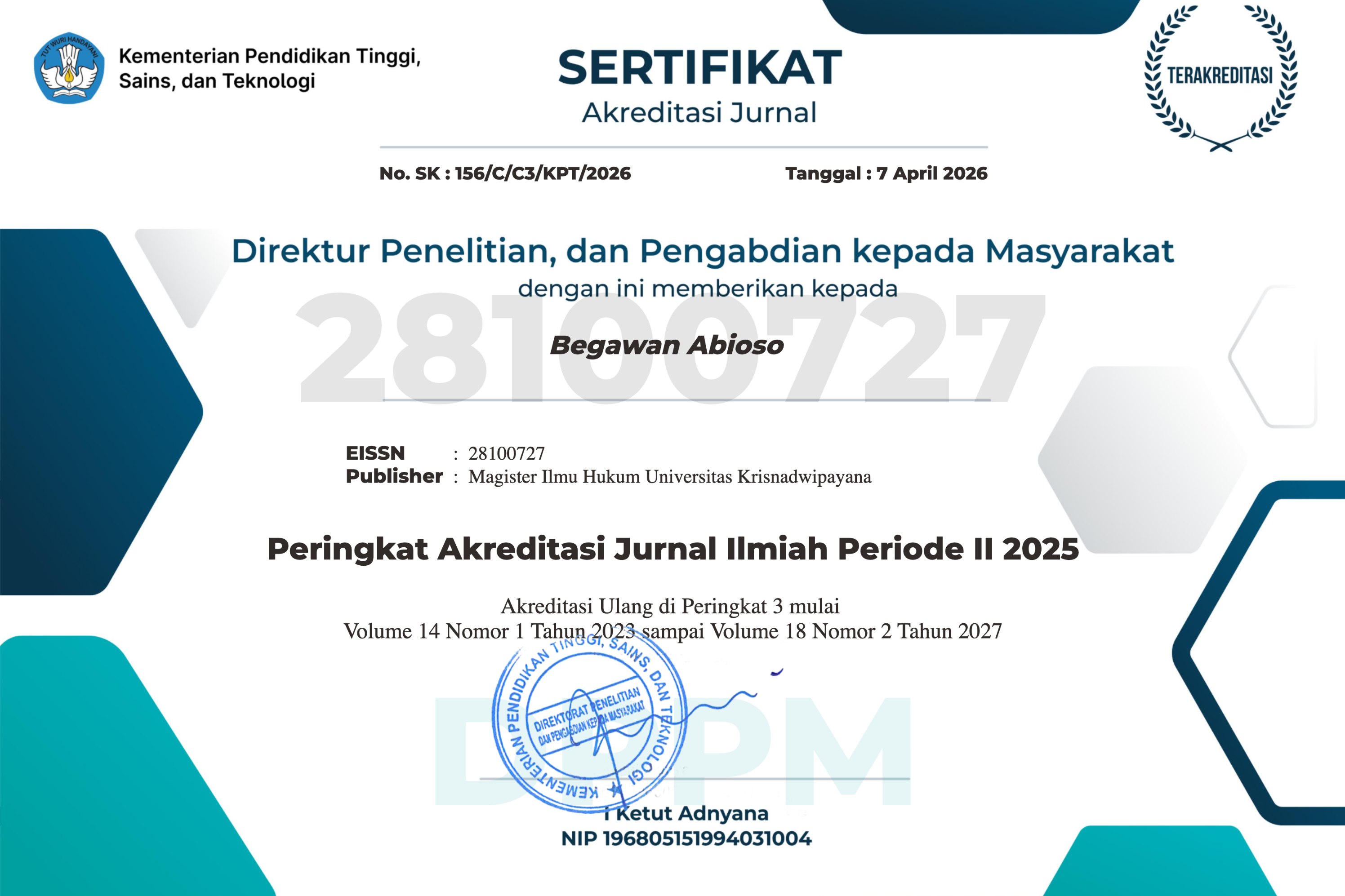


 Begawan Abioso is licensed under a